|
History
of Sweetwater
The
lands that would eventually be Sweetwater are noted in a grant of reservation
to Issac Vann in "Sweet Water" dated July 10, 1817, from the Cherokee
Agency of the Office of Indian Affairs. Development continued along the Sweetwater
Creek, spurred on by the coming of the East Tennessee and Georgia Railroad. By
1852, lots were being sold by I.T. Lenoir for the town of Sweetwater. In 1867,
the community's first printed newspaper came out as the "Sweetwater Forerunner".
An election was held in 1875 to incorporate the present-day City of Sweetwater.
The first Mayor was J.W. Clark, the Recorder was Austin Fry, and the first constable
was J.H. Montgomery. During its first year, the City collected $39.19 in fines,
$133.20 in privilege taxes and $383.02 in other taxes.
 The
usual "city problems" were part of the City's growth. Streets and sidewalks
were major concerns, as well as setting the salary of the street lamp lighter
(Aquilla Orr, $6.00 per month in 1886) and a citizen's petition to close all drinking
saloons at dark (1887). The first fire limit was established in 1891 and the first
school directors were appointed in 1893. By 1897, the City built its first permanent
City Hall (still standing) and the population numbered 1,200 persons. The
usual "city problems" were part of the City's growth. Streets and sidewalks
were major concerns, as well as setting the salary of the street lamp lighter
(Aquilla Orr, $6.00 per month in 1886) and a citizen's petition to close all drinking
saloons at dark (1887). The first fire limit was established in 1891 and the first
school directors were appointed in 1893. By 1897, the City built its first permanent
City Hall (still standing) and the population numbered 1,200 persons.
1905
saw the beginning of the public library in the City and in 1915 Circle Park was
opened downtown. By 1917 the City had an ordinance to regulate automobile garages
in town and in 1920 it was voted that on the first Monday of each month the City
would furnish a wagon to haul off trash and garbage (Note: Anyone failing to keep
their premises clean was to be arrested). 1924 saw the purchase of the City's
first mobile fire fighting equipment as the Brockway Torpedo arrived via rail
and was put into service (still operating for special events as part of the City
Fire Department). The Post Office was built in 1938 to keep Sweetwater in touch
with the world and in 1939 the City purchased the existing electric distribution
system.
The 1940's brought the Planning Commission
(1944) and building permits were required for construction (1947). In 1950 the
phone system changed to the "new dial system" from the "old magnetic
system" and in 1951 natural gas was available in town. Home rule was adopted
in a referendum in 1955 and is still the legal authority for the City government.
An
urban renewal program adopted in 1960 created the "Heartland Industrial Park"
in the downtown area. The City adopted a sales tax and began a Head Start program
in 1965 and in 1966 began the fluoridation of City water.
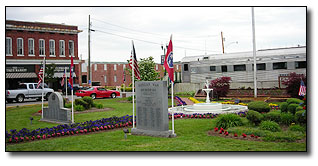 The
1970's saw establishment of the Recreation and Parks Commission to develop the
present-day recreation center which opened in May, 1977. The present City Hall
complex was completed in 1978-1979. The Sweetwater railroad car was placed at
Circle Park downtown in March, 1981. The
1970's saw establishment of the Recreation and Parks Commission to develop the
present-day recreation center which opened in May, 1977. The present City Hall
complex was completed in 1978-1979. The Sweetwater railroad car was placed at
Circle Park downtown in March, 1981.
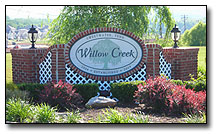 More
recent development has seen the creation of the commercial district along Highway
68, additions and new buildings for the school system, the opening of a new fire
hall on Highway 322, and construction on a traditional neighborhood
development known as "Willow Creek". More
recent development has seen the creation of the commercial district along Highway
68, additions and new buildings for the school system, the opening of a new fire
hall on Highway 322, and construction on a traditional neighborhood
development known as "Willow Creek".
Providing
for the needs and services required by our community has always been a part of
what Sweetwater is about. We're proud of our past and look forward to our future,
becoming all that we can as a community of people together. Come join us when
you can!
*Source of historical
information is the work of Sally Sands, a resident of Sweetwater, and her multi-volume
work, A History of Monroe County, Tennessee
|


